One Medical
- 3.1
- Rating
- 500.00K
- Installs
- Free
- Price

 Analysis by App-foxy
I approached One Medical as a practical healthcare companion rather than as a general wellness app. It is a medical app from 1Life Healthcare, Inc., designed to make arranging care for physical and mental health feel less like a chore. That distinction matters: this is not mainly a symptom diary, fitness tracker, or medicine reminder. Its value depends on how well it fits into the way you already seek professional care.
The app is free to install and carries an Everyone age rating, which makes trying it straightforward. The important financial detail is that free access to an app is not the same thing as free medical treatment. I would use the app to explore the care experience and manage relevant tasks, but I would not assume that every appointment, consultation, test, or treatment connected with the service is included at no cost. The app itself does not turn healthcare into an unlimited free service.
How One Medical fits into everyday healthcare
In my experience, the strongest idea behind this app is convenience. Healthcare often becomes difficult because of small points of friction: finding the right place to start, deciding whether a concern belongs with a primary-care professional or a mental-health provider, and trying to handle a request when you are busy. One Medical brings those needs into a mobile setting, giving the experience a more direct starting point than searching the web every time.
You May Also Like

 Blood Strike: 2.5 Anniversary
Blood Strike’s Loadouts Turn Every Drop Into a Tactical Gamble
A close look at Blood Strike’s custom loadouts: how fast access to signature weapons reshapes its battle royale rhythm, rewards preparation, and narrows the gap between fights.

 Pandora - Music & Podcasts
Pandora’s Music Is Easy to Start, but Harder to Recover
Pandora’s strength is its low-effort path from a seed to a station. Its weak spot is how much confidence it asks you to place in connection, setup, and quiet recovery.

 8 Ball Pool
 Is Built on Rivalries, Rematches, and Routine
A close look at the rivalries, rematches, shared routines, and unanswered safety questions that turn a quick pool match into a persistent mobile community.

 Samsung Music
’s Quiet Strength Is Playing What You Already Own
Its reach comes less from spectacle than from dependable access to a personal library. That simplicity is both the app’s strongest retention engine and its ceiling.

 AccuWeather: Weather Radar
AccuWeather Review: A Quick, Clear Forecast for Everyday Decisions
For everyday plans, the best forecast is the one you can understand quickly. AccuWeather makes rain timing, radar, and local conditions easy to act on, with a few trade-offs.

 Hill Climb Racing
Why Hill Climb Racing Still Turns Crashes Into One More Run
A tiny car, a bumpy hill and one more upgrade: Hill Climb Racing keeps resurfacing because its simple chaos makes every near-miss feel personal.
More From Our News Desk



The store summary describes care for both body and mind, and that broad scope is useful. Physical symptoms and emotional concerns do not always arrive separately, so an app that treats mental healthcare as part of the same general care journey can feel more natural than one that forces you to use several unrelated services. I especially appreciate that this positioning does not present the app as a replacement for urgent medical help. For serious or rapidly worsening symptoms, I would still contact emergency services or seek immediate in-person care.
The app has been available since Mar 27, 2013, and its current version is 4.126.0. On Android, the minimum operating-system requirement is 10. That requirement is worth checking before installation, particularly if you keep an older phone for healthcare access or share a device with a family member. A current app version can improve compatibility and reliability, but an update alone cannot guarantee that every device or account experience will feel identical.
What the free download really offers
One Medical costs nothing to download, so the first step is low risk. I see that as an invitation to test whether the service matches your healthcare habits, not as proof that it is the cheapest way to receive care. The practical value comes from the time and effort it may save when you need to begin a care request, keep track of an interaction, or deal with a routine concern without starting from scratch.
That distinction is one of the most important things to understand before relying on it. A free app can still sit alongside paid healthcare services, insurance arrangements, membership conditions, or charges related to a particular type of care. Since those costs can depend on circumstances outside the download itself, I would review the terms that apply to my own situation before treating the app as a budget healthcare solution.
For someone already eligible to use the associated service, the free app can be a useful access point. For someone simply looking for no-cost medical advice, it may not meet that expectation. In that case, a public health line, an insurance-provided nurse service, or a local clinic may be more appropriate, depending on the concern and location.
Where the app can save real effort
The most convincing use case is a routine issue that does not justify an emergency visit but still deserves professional attention. Imagine waking up with a persistent but non-severe symptom before a busy workday. Instead of waiting until evening to search for a clinic, I would use the app as the first place to organize the request and decide what kind of care to pursue. That does not remove the need for clinical judgment, but it can make the first step less intimidating.
A second useful scenario involves mental health. Someone may be comfortable asking for help but uncomfortable making several phone calls or explaining the same situation repeatedly to different offices. A unified mobile starting point can lower that barrier. I would still pay attention to the type of support being offered and whether it suits the seriousness of the situation. A convenient digital entry point is helpful, but it should not delay urgent help during a crisis.
There is also value in using the app before you actually feel ill. I would install it, sign in if appropriate, and understand the available care path while calm rather than waiting until I am tired, worried, or in pain. That small preparation step is easy to overlook, yet it can make the service much easier to use when a real need appears.
Three practical habits that improve the experience
First, I would write down the main reason for contacting care before opening the app. A short timeline, the most noticeable symptom, and the question I want answered are more useful than a long, unfocused description. This helps me use a digital consultation efficiently and reduces the chance that I forget an important detail under pressure.
Second, I would separate convenience from urgency. A mobile app encourages a calm, asynchronous mindset, but not every medical problem belongs in a convenient digital workflow. Sudden severe symptoms, breathing difficulty, serious injury, or an immediate safety concern call for faster help through the appropriate emergency channel. The app is most valuable when it helps with suitable care, not when it tempts someone to wait.
Third, I would treat the app as part of a record-keeping routine rather than as my entire health history. Before contacting care, I would keep relevant medication names, allergies, recent changes, and questions nearby. Even when an app streamlines communication, accurate context still comes from the patient. This preparation is especially useful when discussing mental-health concerns, where changes in sleep, mood, stress, or daily functioning may be important.
These habits are not flashy features, but they are the difference between downloading a healthcare app and using one well. One Medical can reduce the number of steps between a concern and a care request, yet it cannot replace preparation, honesty, or good judgment about urgency.
How it compares with familiar alternatives
The usual alternative is a clinic website combined with phone calls, email, and a patient portal. That approach may be better for people whose existing doctor already has a strong portal, because continuity and access to established records can matter more than a polished mobile entry point. If my primary-care provider already offers reliable messaging and appointment management, I would compare that experience carefully before adding another healthcare channel.
Another alternative is a general telehealth app. Those services may appeal to someone who wants to compare providers or seek a one-off consultation. One Medical feels more focused on an ongoing care relationship and on bringing physical and mental-health needs into one recognizable service. That focus can be an advantage when continuity matters, but it may be less attractive if I only want a single, narrowly defined consultation.
Search engines and symptom-checking tools are also common substitutes, although I would be cautious about treating them as medical care. They can help me formulate questions, but they cannot provide the same professional relationship as a clinical service. One Medical is more useful when I am ready to move beyond searching and contact an appropriate care team.
Where the trade-offs become visible
The app’s convenience is also its main limitation. A mobile workflow can make care feel accessible, but it may leave some people wanting more immediate reassurance, a physical examination, or a clearer sense of what happens next. If I am worried about a symptom that needs hands-on assessment, I would not choose a digital-first route merely because it is easier to open.
There is a second trade-off around expectations. The simple promise of getting care through an app can make the process sound more universal than real healthcare usually is. Eligibility, availability, follow-up, and cost can all affect the experience. I would therefore judge the app by whether it gives me a workable path to the care I can actually use, not just by how quickly I can install it.
The average rating is 3.1 from around 2.2 thousand ratings, with roughly 975 written reviews. I read that as a sign to keep expectations measured. The app has reached more than 500 thousand installs, so it is clearly being tried by a substantial audience, but popularity does not guarantee that it will suit every patient, device, or care situation. I would test the basic workflow before making it my only route to healthcare.
Another practical concern is device access. Because the app requires Android 10 or newer, someone using an older phone may need another route to care. That is not a criticism of the medical model itself, but it is a real access issue. Healthcare tools should be judged partly by whether the people who need them can reliably reach them, and an operating-system requirement can matter in families or communities with aging devices.
Who is likely to get the most value
I think the app is most useful for people who prefer handling routine healthcare tasks from a phone and who can access the care service behind it. It is a good candidate for busy adults, people who dislike phone-based scheduling, and users who want one starting point for physical and mental-health concerns. It can also suit someone who wants to prepare for care in advance rather than waiting until a problem becomes disruptive.
It may be particularly helpful for a person who has several ordinary questions but does not know which office to contact first. Instead of treating each concern as a separate search project, the app can provide a more coherent place to begin. That does not mean every issue will follow the same path, but it can reduce the mental load of deciding where to start.
I would be more cautious if I needed immediate in-person treatment, had limited access to a compatible device, or wanted a completely free medical service. I would also compare it with my existing provider’s portal if continuity with a familiar clinician is my highest priority. In those situations, the app may add another layer rather than remove one.
My verdict on downloading it
Because the download is free, I think One Medical is worth trying for people who are eligible to use its care service and want a simpler mobile entry point. The value is not in the installation itself; it is in whether the app makes professional care easier to reach, especially for routine physical or mental-health needs. I would install it before an appointment is urgent, check that my device meets the requirement, and learn how the care process fits my circumstances.
I would skip it if I were expecting unlimited free treatment, an emergency-response tool, or a universal replacement for my doctor’s existing system. I would also avoid making it my only healthcare option until I understood the costs, access conditions, and appropriate use cases for my account.
My final view is cautiously positive. One Medical has a clear purpose and a useful focus on making care access less cumbersome, but its success depends heavily on the surrounding healthcare arrangement. The free download is easy to justify; the real decision is whether the care access it connects you to delivers enough convenience and continuity for your situation. For the right user, that can be meaningful everyday value. For everyone else, a local provider, established patient portal, or urgent-care option may be the better fit.
FAQs for One Medical
01What is One Medical, and what can I use the app for?
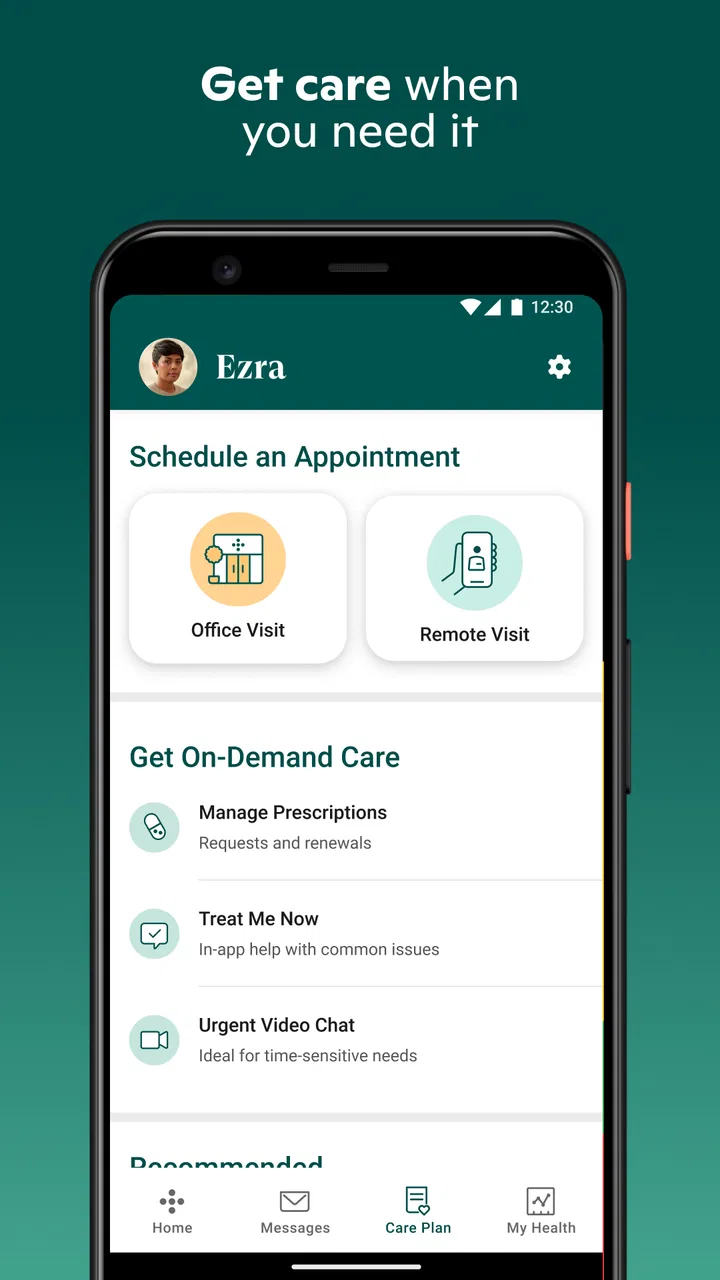
One Medical is a healthcare service and mobile app designed to help members manage primary care more conveniently. Depending on your membership, location, and available services, you can use the app to request appointments, communicate with care teams, review certain health information, access virtual care, manage prescriptions, and find nearby One Medical offices. Features may vary by plan and region.
02Do I need a One Medical membership to use the app?
Most of One Medical’s core services require an active membership, although the exact requirements can depend on your employer, insurance arrangement, location, and the service you are trying to access. Before downloading, check the current eligibility and pricing information in your area. The app itself may be free to install, but access to appointments and clinical services can involve membership fees or insurance costs.
03Can I schedule virtual and in-person appointments through One Medical?
Yes, the app generally allows eligible members to look for available appointments and choose between virtual care and visits at participating One Medical offices. Availability depends on the type of concern, your location, clinician schedules, and your membership or insurance coverage. Some medical issues may require an in-person examination, so virtual care is not always an appropriate replacement for office-based treatment.
04Can One Medical be used for urgent or emergency medical problems?
One Medical may be useful for many routine primary-care needs and certain time-sensitive concerns, but it should not replace emergency services. If you experience symptoms such as severe chest pain, difficulty breathing, signs of stroke, uncontrolled bleeding, or another potentially life-threatening condition, call local emergency services immediately. For less serious urgent issues, use the app to review available care options or contact the care team.
05How does One Medical handle prescriptions and personal health information?
Eligible users may be able to request prescription renewals, communicate with clinicians, view selected medical information, and manage pharmacy-related details through the app. Health information is handled through the service’s privacy and security practices, but users should still protect their login credentials and avoid sharing account access. Prescription approvals, refills, and pharmacy support depend on clinician review, medication type, and applicable regulations.
Pros
- Same-day appointments are often available at convenient locations.
- In-app messaging makes it easy to contact the care team between visits.
- Prescription renewals and pharmacy coordination are handled in one place.
- Digital health records help keep visits
- medications
- and test results organized.
- Virtual visits can save time for routine follow-ups and minor concerns.
Cons
- Membership fees may apply in addition to insurance and medical costs.
- Availability and services vary considerably by location.
- Some appointments may be limited to One Medical members.
- Not every condition can be diagnosed or treated through virtual care.
- Specialist referrals may still require separate providers and appointments.

One Medical
Gallery